




| IN A NUTSHELL |
|
The video game industry is facing a significant moment as Electronic Arts (EA), one of the largest developers and publishers globally, is set to be acquired in a $55 billion deal involving the sovereign wealth fund of Saudi Arabia and private equity firms, including Jared Kushner’s Affinity Partners. This development has sparked widespread concern, particularly among the United Videogame Workers-CWA (UVW-CWA), a union representing video game industry employees across the U.S. and Canada. The union’s opposition highlights the broader implications of such acquisitions, including potential job losses, ethical considerations, and the concentration of corporate power.
Union Concerns Over the EA Buyout
The UVW-CWA has issued a firm statement against the proposed acquisition of EA. The union argues that the deal will concentrate power and wealth, benefiting a select group of stakeholders while disregarding the interests of both players and employees. The union’s statement emphasizes that EA is not a struggling company; it generates annual revenues of $7.5 billion, with $1 billion profit annually. This profitability, largely driven by the creativity and innovation of its workforce, raises questions about the necessity of such a buyout.
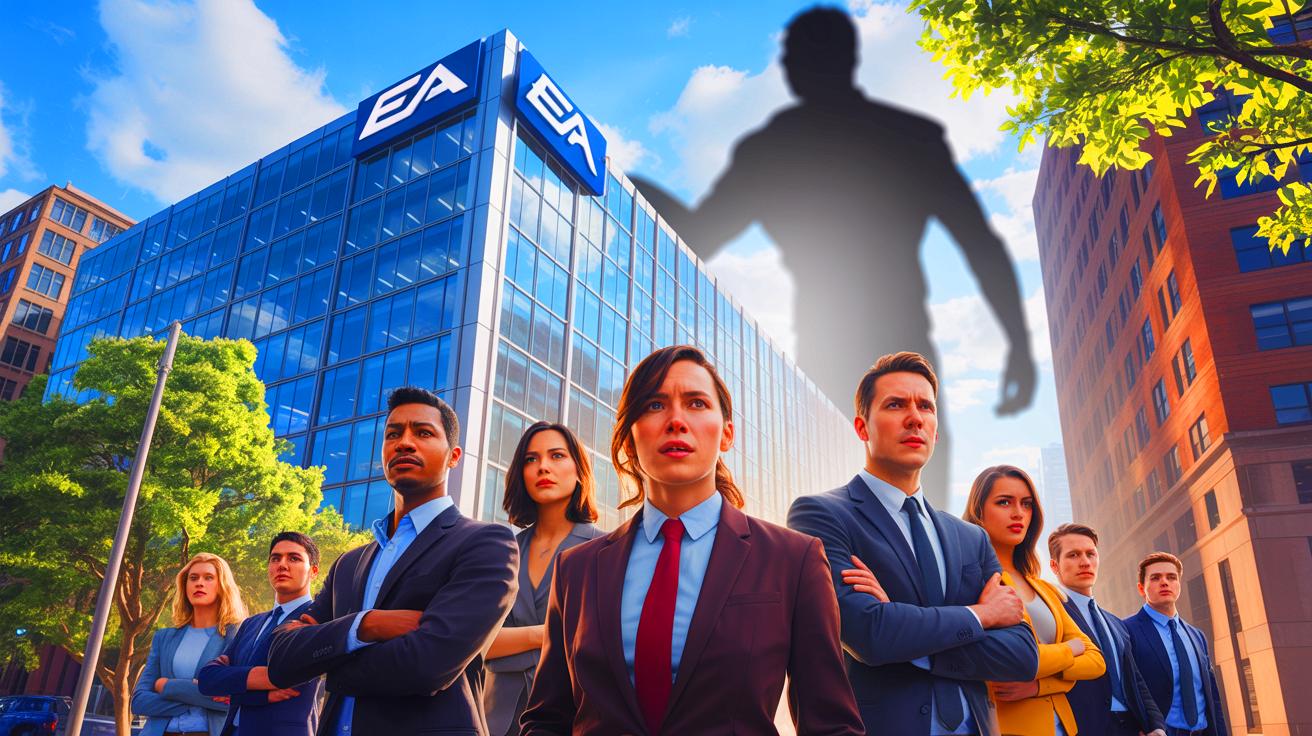
According to the union, EA’s workforce is vital to the company’s success, yet they were excluded from the negotiation process. This exclusion underscores a lack of representation for the employees whose contributions have made EA an attractive acquisition target. The union’s statement highlights a growing concern that the acquisition could lead to layoffs and studio closures, which would be choices made to enhance investor profits rather than necessities for the company’s survival.
“Fear Gripped Me”: Battlefield 6’s Explosive Beta Maps Spark Outrage and Awe Among Gamers
National Security and Foreign Influence Concerns
Beyond the immediate impact on workers, the proposed buyout has raised alarms among U.S. lawmakers about potential national security risks and foreign influence. Some U.S. senators have expressed profound concern over the involvement of the Saudi sovereign wealth fund in the acquisition. This involvement raises ethical questions, given the geopolitical implications and the fund’s ties to the Saudi government.
The anxiety over foreign influence in the U.S. video game industry is not without precedent. The recent scrutiny over Microsoft’s $70 billion acquisition of Activision Blizzard by the Federal Trade Commission (FTC) illustrates the increasing governmental focus on major buyouts in the sector. The potential for foreign entities to exert influence over American companies, particularly in technology and media, is a critical point of concern that extends beyond the video game industry.
Impact on Employees and Creative Freedom
For EA employees, the prospect of a buyout by private equity firms is fraught with uncertainty. Historically, such acquisitions have not led to better working conditions or product quality. Instead, they often result in downsizing, project cancellations, and studio closures. The union fears that studios deemed less profitable will be sacrificed to manage the debt incurred from the acquisition, which is projected to be nearly $20 billion.
The stakes are particularly high for smaller studios within EA that contribute significantly to the company’s reputation. The union’s statement stresses the importance of preserving these studios, as they play a crucial role in the diversity and creativity of EA’s offerings. Moreover, the union calls on regulators and elected officials to ensure that any future actions protect jobs and creative freedom, maintaining accountability to the workforce that sustains the industry.
The Role of Unionization in Industry Change
The UVW-CWA’s response to the buyout underscores the necessity of organized labor in advocating for fair treatment in the industry. The union argues that organizing provides workers with a meaningful voice in ownership transitions and ensures that their interests are considered in corporate decision-making. Unionization is presented as a critical counterbalance to corporate interests in the video game sector, which is often characterized by rapid changes and high-stakes financial deals.
The union’s call to action highlights the broader trend of increasing labor organization within the tech and entertainment industries. As the industry evolves, the role of unions in advocating for worker rights and fair labor practices becomes ever more crucial. By standing together, the UVW-CWA aims to ensure that the value of video games, rooted in the creativity and labor of its workers, is recognized and respected.
As the proposed EA acquisition continues to unfold, it poses significant questions for the future of the video game industry. How will stakeholders balance the interests of investors, employees, and consumers in an increasingly complex global marketplace?