




| IN A NUTSHELL |
|
In the fast-paced and highly competitive world of video gaming, balance issues can make or break a player’s experience. Recently, Battlefield 6 has come under scrutiny due to an unexpected glitch that allows players to defy the game’s physics. By exploiting buggy ladders, players can bounce across maps in a manner reminiscent of a jetpack, despite Electronic Arts’ (EA) efforts to impose movement nerfs. This exploit not only disrupts game balance but also undermines the developer’s intentions, leaving both players and developers grappling with the implications.
The Unexpected Ladder Exploit
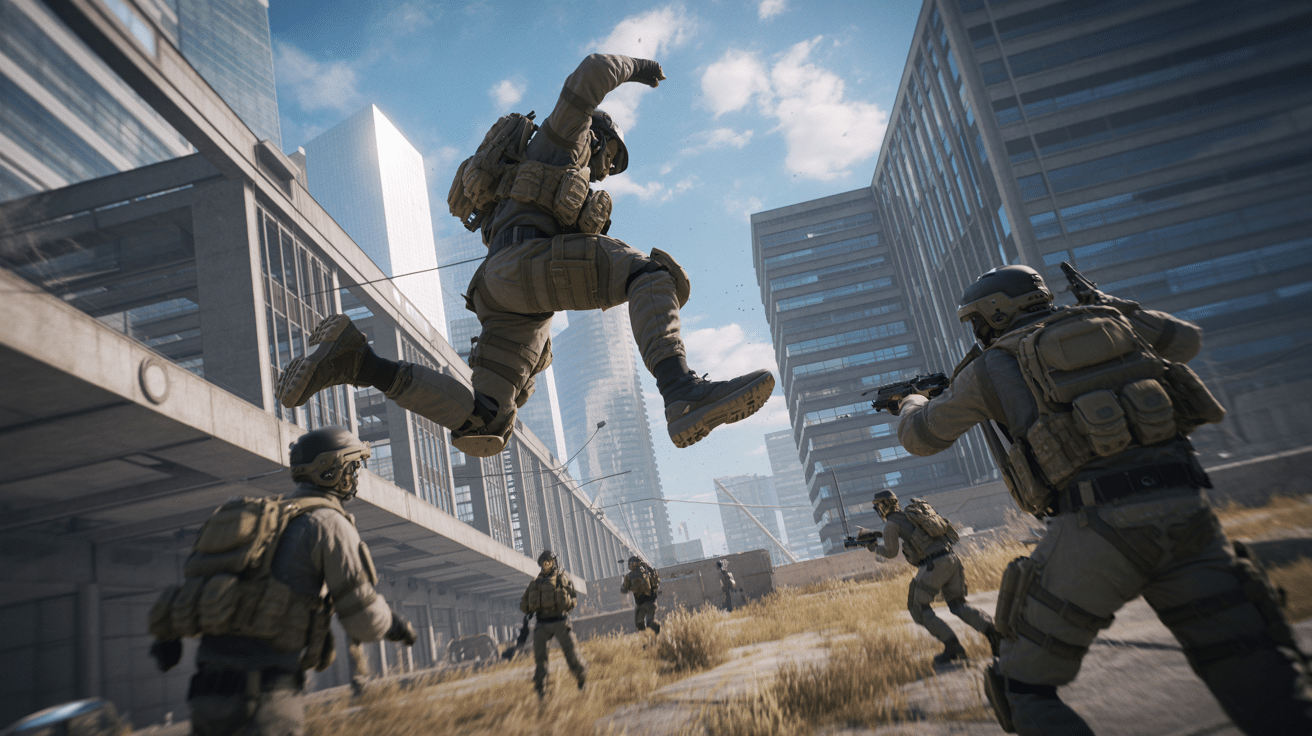
Battlefield 6 players have discovered a surprising exploit involving ladders which enables them to bounce around maps with ease. The phenomenon allows users to perform jumps of up to 40 to 50 feet by positioning ladders against walls. Upon climbing and turning away from the wall, players find themselves soaring through the air. This unintended feature has become a hot topic within the gaming community, with numerous videos circulating on social media showcasing these gravity-defying feats.
Such exploits can severely disrupt the intended gameplay experience. Players who lose to opponents using this glitch may feel frustrated and cheated. The glitch effectively nullifies the movement restrictions that EA introduced after receiving feedback during the beta phase and post-launch updates. While the sight of players bouncing through the air can be entertaining, the exploit raises questions about game integrity and fairness.
Developer Response and Next Steps
EA has acknowledged the issue and is actively working to address it. David Sirland, the lead producer for Battlefield 6, responded to a video demonstrating the glitch by affirming that the issue will be patched out. This response provides some reassurance to players concerned about the exploit’s impact on gameplay.
However, the exact timeline for the patch remains uncertain. Players are eager for a swift resolution, especially since no updates have been released since the launch day patch. The delay is a point of concern as players continue to experience the unintended advantage that the exploit provides. EA’s commitment to resolving the issue is vital for maintaining player trust and ensuring a level playing field.
Ongoing Challenges with Game Mechanics
The ladder exploit is not the only challenge facing Battlefield 6. The game has also been plagued by a “ghost bullet” problem, where players observe bullets hitting targets without registering damage. This issue has sparked debates within the community, particularly concerning the mechanics known as ‘bloom’ in shooting games.
Addressing such issues is crucial for preserving the game’s reputation and player satisfaction. Developers must continually refine and update the game’s mechanics to ensure a smooth and competitive experience. The community’s feedback plays an essential role in identifying and prioritizing these fixes, as evidenced by EA’s attention to the movement and sliding changes based on player input.
Balancing Player Expectations and Game Design
Developers face the complex task of balancing player expectations with the intended game design. Battlefield 6 aims to differentiate itself from other first-person shooters by emphasizing a traditional Battlefield experience over a Call of Duty-like approach. This objective requires careful calibration of game mechanics to align with the series’ identity while accommodating player preferences.
EA’s efforts to address movement bugs, missing rewards, and other core elements demonstrate their commitment to refining the gameplay experience. By taking player feedback into account, developers can better align their updates with community desires. However, achieving this balance is an ongoing process that requires constant adaptation and communication with the player base.
The ongoing challenges in Battlefield 6 highlight the complexity of modern game development. As developers work to address issues like the ladder exploit and ghost bullet problem, they must also consider the broader implications on player satisfaction and game integrity. The situation raises an important question for the gaming industry: How can developers effectively balance innovative gameplay features with fair and competitive mechanics?