



Retro Gaming Revolution: “This HD Remake” Could Reshape the Future for Millions of Casual Players with Priceless Physical Collections
 By
Sanjay Mistry
By
Sanjay Mistry
| IN A NUTSHELL |
|
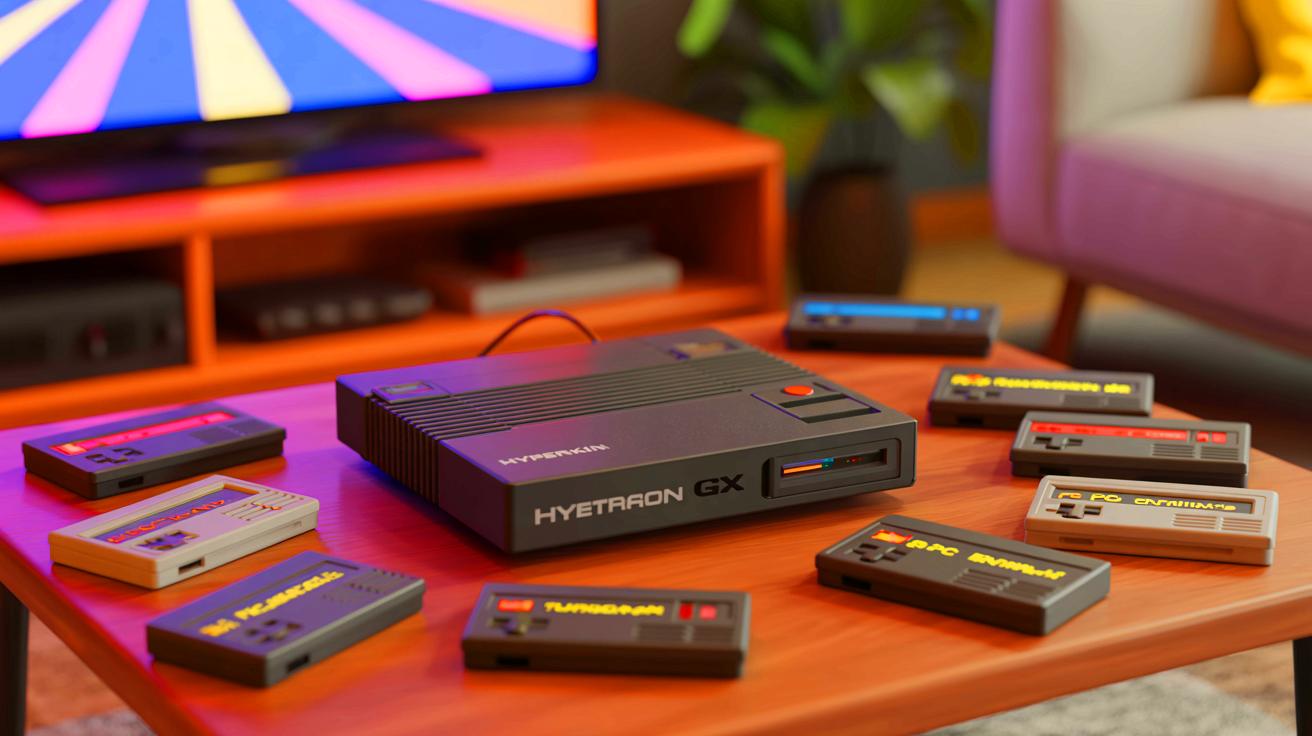
The revival of retro gaming consoles continues to captivate enthusiasts and collectors alike, with the latest entry being Hyperkin’s RetroN GX. This new console aims to bring the charm and nostalgia of the classic TurboGrafx-16 and its Japanese counterpart, the PC Engine, to modern audiences. Announced in 2022, the RetroN GX faced production delays due to component shortages but is now set to hit the market on August 20. Priced at $99.99, it offers a more accessible option for those wishing to relive the 8-bit gaming era without the hefty price tag of original hardware or premium alternatives.
The Legacy of TurboGrafx-16 and PC Engine
The TurboGrafx-16, known as the PC Engine in Japan, holds a unique place in gaming history. Released in 1987, it was a product of the renowned game publisher Hudson Soft. Despite its 8-bit architecture, the console featured a 16-bit graphics processor, which allowed it to deliver visuals comparable to the SNES and Sega Genesis. However, it struggled to compete with the immense popularity of Nintendo’s Famicom and NES systems.
In 1989, the TurboGrafx-16 made its way to the United States, but its late entry into the market and strong competition limited its success. The console’s legacy, however, endures among retro gaming enthusiasts who appreciate its unique library of games and innovative hardware.
Features and Capabilities of the RetroN GX
The RetroN GX aims to bring the classic TurboGrafx-16 and PC Engine experience to modern gamers through emulation. The console supports original game cartridges, known as “Hucards,” and connects to modern TVs via HDMI, offering 720p resolution. This eliminates the need for additional upscalers or adapters that original hardware would require.
While emulation provides a convenient way to access classic games, it does come with certain limitations. Not all Hucards may be fully compatible, and users might encounter visual or audio glitches. Additionally, the RetroN GX does not support flashcarts, limiting the ability to play game backups.
The RetroN GX provides a balance between accessibility and nostalgia, offering features like save states and visual enhancements that cater to both casual gamers and collectors.
Comparing Retro Gaming Options
The RetroN GX is not the only option for those interested in revisiting the TurboGrafx-16 and PC Engine games. The PC Engine Mini, released in 2020, offers a plug-and-play experience with 57 built-in games, though it lacks a cartridge slot. For purists, the Analogue Duo provides a hardware-based emulation experience using FPGA technology, though it comes at a higher price point.
Each option has its advantages and drawbacks. The RetroN GX’s price point and cartridge support make it an attractive choice for those with physical game collections. Meanwhile, the PC Engine Mini provides a convenient, pre-loaded experience, and the Analogue Duo offers a closer replication of original hardware.
Choosing a retro gaming console depends on individual preferences, be it the authenticity of gameplay, the convenience of modern features, or the nostalgia of physical cartridges.
The Future of Retro Gaming Consoles
The resurgence of interest in retro gaming consoles highlights a broader trend in the gaming industry: the desire to preserve and celebrate gaming history. Companies like Hyperkin, Analogue, and others continue to innovate, creating products that cater to both long-time fans and new audiences.
As technology advances, so do the capabilities of these retro consoles, with features like save states, rewind functions, and enhanced graphics becoming standard. This blending of old and new ensures that classic games remain accessible and enjoyable for future generations.
The RetroN GX exemplifies this trend, providing a bridge between the past and present. As the console prepares for its release, one might wonder: how will the continued evolution of retro gaming technology influence the way we experience and preserve gaming history?